
Pinkeye: Symptoms, Treatments, and Home Remedies

Pinkeye

Pinkeye: Symptoms, Treatments, and Home Remedies

You might be tempted to visit the doctor straight away if you or your child develops pinkeye. You might not, though.

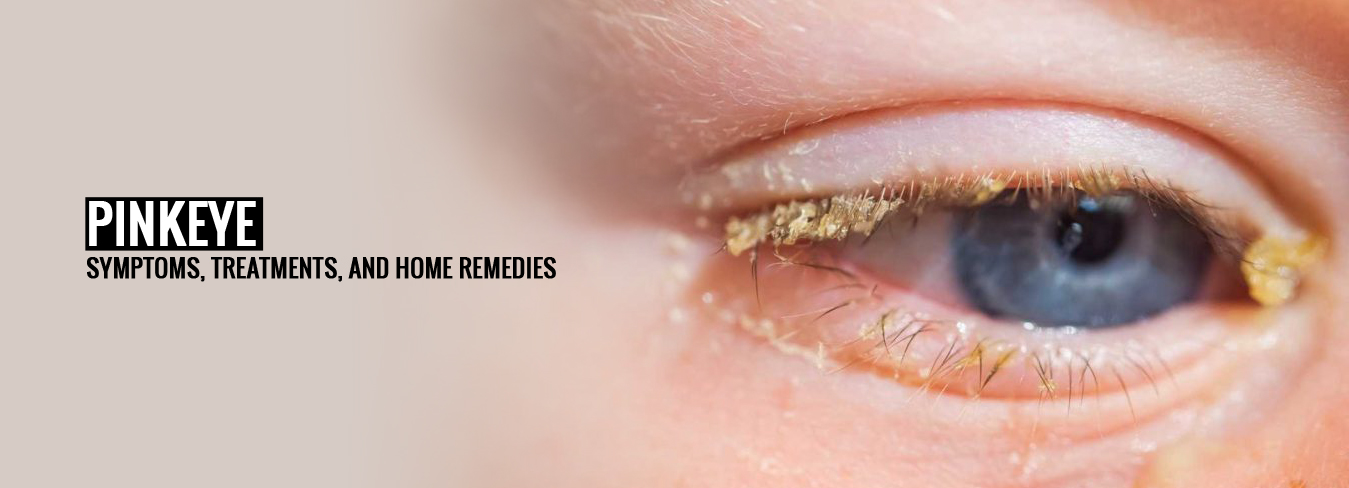
Pinkeye, also known as conjunctivitis, can be brought on by viruses, bacteria, and allergies. Your eyes get irritated and red, either one or both. The afflicted eye will shed tears often or have a whitish or yellowish discharge. The symptoms may persist for a week, ten days, or even longer, though they occasionally go away on their own.

Also Read: Five Common Eye Problems in Children & Their Remedies
Pinkeye

Conjunctivitis (pinkeye) symptoms include:

  • The white of the eye (s) becomes colored pink or red
  • The thin membrane that lines the white of the eye and the inside of the eyelids, known as the conjunctiva, as well as the eyelids themselves, will swell
  • Increased production of tears
  • Feeling as though something foreign is in one’s eye(s) or have the impulse to rub one’s eye (s)
  • Itching, burning, or irritation
  • Discharge (mucus or pus)
  • Eyelids or lashes that are particularly crusty in the morning

Home Remedies for Treating Various Types of Pinkeye

Whatever the cause of your pinkeye, there are a few easy steps you may follow to feel better:

Apply a Compress:

In cool water, soak a lint-free cloth. Press it gently against your closed eyes after wringing it out. You don’t want to harm your eyes, so don’t press too firmly. Keep the compress away from the healthy eye if you just have one affected by pinkeye since it could become infected too. If it makes you feel better, use warm water. Making it too hot, though, could exacerbate pinkeye or cause eyelid burns. Use a compress several times each day for a short period. Ensure that no one else is using the cloth.

Use eye drops:

The pinkeye itching can be reduced by over-the-counter drops. Look for “artificial tears” or “lubricating droplets.” Avoid those that cure “red eyes.” Your drops might feel even better if you keep them in the fridge.

Don’t use your contact lenses:

If you wear contacts, wait to put them in until your pinkeye is healed. Your case and lenses might need to be replaced later. You might be re-infected if there are bacteria or viruses present.

Treatment for Viral Pinkeye

A virus-induced case of pinkeye may begin in one eye and progress to the other. In a week or two, it will typically go on its own. To treat more severe infections like varicella zoster or herpes simplex, your doctor may prescribe medicine.

Treating Bacterial Pinkeye

If bacteria are the cause of your pinkeye, you’ll likely have more mucous or pus. Antibiotics, typically eye drops, can be prescribed by your doctor. In a few days, mild cases often heal on their own. Use a warm towel to relax your eyelids if the mucus is causing them to stick together.

Treating allergic pinkeye

In most cases, allergic pinkeye becomes better when you avoid the allergen or minimize your exposure to it. Tests might be administered by your doctor to pinpoint the issue.

Pinkeye from an allergy is not communicable. You don’t have to be concerned about transferring it to someone else if you go to work or school.

Wash your bedding and clothing frequently. Taking a bath or shower before bed may also be beneficial. Ask your doctor about any possible aiding medications.

They may suggest over-the-counter or prescribed medications like:

· Medications for allergies such as mast cell stabilizers or antihistamines

· Decongestants and other anti-inflammatory drugs.

When to Visit a doctor

A stye, which frequently resembles a pimple or a red patch on your eyelid, or some other type of inflammation could potentially be the reason for red or swollen eyes.

Another kind of allergic reaction might potentially be the cause. Consult a doctor if your pinkeye doesn’t improve after using home cures for a few days.

Additionally, you should consult your doctor if you have:

  • Fever
  • Pain
  • alterations to vision
Conclusion

Take necessary precautions to prevent pinkeye from spreading to others if it has invaded your home. Everyone in your household should make the habit of frequent hand washing and aim to avoid touching their eyes. It also helps to wash your pillowcases and towels in hot water and replace them frequently. If someone has pinkeye, never share towels or pillows with them.


Five Common Eye Problems in Children & Their Remedies

common eye problems

[vc_row][vc_column width=”1/1″][vc_column_text]Do your children find it hard to read? Are your children rubbing their eyes a lot? Children are more likely to have eye problems. Children are increasingly exposed to mobile phones and laptops, which has led to an increase in common eye problems.

It is important to recognize the problem and take appropriate actions to ensure they can perform daily activities without any difficulty.

Let’s take a look at common eye problems that children may have and how we can treat them. It is important to recognize the symptoms that children with common eye problems have before we get into the details.[/vc_column_text][vc_custom_heading text=”Common Eye Problems Symptoms to be Looked for in Children” use_theme_fonts=”yes”][us_image image=”7513″ size=”full” align=”center”][ultimate_spacer height=”10″][vc_custom_heading text=”Common Eye Problems Symptoms to be Looked for in Children” use_theme_fonts=”yes”][vc_column_text]Children with common eye problems are most likely to experience the following symptoms:

  • Poor focus
  • Sensitivity to light
  • Reading difficult
  • Eye redness
  • Inability to see distant objects or the blackboard
  • Rub your eyes
  • Too close to the TV

[/vc_column_text][vc_custom_heading text=”Common Eye Problems for Children” use_theme_fonts=”yes”][vc_column_text]

Amblyopia (Lazy Eye):

Amblyopia is an eye condition that causes the brain not to process the inputs coming from one eye, and in time, begins to ignore the inputs. This blocks the development of vision in the weaker eye, resulting in long-term vision problems. Common signs of amblyopia are squinting and poor depth perception and eye wandering or head tilting, among others. It can be treated with glasses, eye patches, and drops for the eyes. A pediatric eye doctor may consider surgery in certain cases.

Chalazion:

It is a swelling of the upper or lower part of the eyelid that is caused by blockage or swelling of the oil gland. At first, it’s not painful but when it becomes infected, the swelling can spread to the entire eyelid and causes pain. It could even increase than normal and cause a cover to the pupil of the child and cause common eye problems. Small chalazion typically disappears at their own pace within a few months but larger and infected ones need to be treated with liquid drops for the eyes, a warm compress surgical drainage, or removal.

Astigmatism, Farsightedness, And Near-sightedness:

The three conditions, known as refractive errors are the most frequent eye issues in both adults and children. They usually result from defects on the cornea’s surface which prevent light from getting focused onto the retina. The condition can be treated through prompt diagnosis by wearing prescribed lenses or glasses by a doctor.

Strabismus:

It is a condition in which eyes move in a different direction and aren’t properly aligned when focusing on an object. Children may be born with strabismus or they get it as they grow older. However, if it lasts for a longer time and causes amblyopia, the condition can be aggravated. It can be treated as early as age 0 using eye patches and exercises, as well as glasses, etc.

Epiphora:

This is an affliction where children experience constant excessive tearing or watery eyes. It’s caused by an obstruction in the tear ducts inflammation, ocular surface disorders, or allergies. It usually improves over a while but should it continue to persist and is not resolved, it can be treated by using eye drops, massage, and minor surgeries.[/vc_column_text][vc_column_text]Prevention is better than treatment. Regular check-ups with an eye specialist are the best way to prevent children from developing common eye problems. These check-ups should be done at least once per year. By doing so, potential and common eye problems can be detected early so that treatment can begin before they become worse. 

It is possible for children to not be able to see when their vision is impaired so parents should be vigilant. Parents need to make sure their children don’t spend too much time on digital screens and encourage them to engage in other activities. They should also be alert for signs that a child may have an eye problem.[/vc_column_text][/vc_column][/vc_row]

Your Normal Eye Pressure Tips to Maintain It Properly

Normal Eye Pressure

[vc_row][vc_column width=”1/1″][vc_column_text]Many eye abnormalities are preceded by high eye pressure. Vision blurriness, eye irritation, headaches, and the perception of haloes are a few symptoms of high eye pressure. Call your optician for a checkup if you notice any of these symptoms. If you are told you have excessive ocular pressure, there are natural ways to lower it.

Your optometrist would advise you to reduce your eye pressure as part of the therapies for your ailment if you have very high one. While there are drugs available to lower ocular pressure, natural approaches work better because they have fewer or no side effects. Here the article will brief about what causes high eye pressure and how to reduce it:

Also Read: 9 COMMON EYE DISEASES: SYMPTOMS AND REMEDIES[/vc_column_text][/vc_column][/vc_row][vc_row][vc_column width=”1/1″][us_image image=”7509″ size=”full” align=”center”][/vc_column][/vc_row][vc_row][vc_column width=”1/1″][vc_column_text]

Is Eye Pressure Normal?

High eye pressure can contribute to the development of glaucoma, but it does not always do so. According to the Glaucoma Research Foundation, it is typical to experience variations throughout the course of the day. There are a few factors that have already been found to be connected with it, even though not all of the causes have yet been discovered.

Causes of High Pressure On Eyes and Glaucoma:

  • Restricted Blood Flow:

Clear fluid (aqueous humor) flows continuously from the front of your eye. An even amount is added to replenish the amount that has been drained. However, Fluid builds up in the eyes when this flow is stopped. Glaucoma is a condition where nerve damage can be caused by pressure.

  • Thick Cornea:

A doctor might perform a pachymetry test in order to determine the cornea thickness if a patient is being examined for glaucoma. Although this has no effect on the actual fluid pressure of the eye, the thicker cornea could cause false highs.

Lifestyle Tips to Reduce Eye Pressure:

Changing your routine can help balance and maintain normal eye pressure and promote eye health. Here are some natural ways you can follow to maintain it.

  • Exercising – Cardio increases blood flow throughout your body, which includes the optic nerves as well as the retina. Cardio is an important part of your daily routine, as it can cause vision problems and eye diseases.
  • Healthy Diet- Eye health can be improved by eating dark leafy greens and foods rich in omega-3 fatty acids, as well as adding more vitamins to reduce eye pressure like vitamin C, E, and A to your diet.
  • Elevated sleeping – According to The Mayo Clinic’s recommendation, you can maintain it by sleeping with your head on a wedge or stack of pillows at a 20-degree angle.
  • Herbal supplements- Ginkgo and Bilberry are two examples of herbal remedies that advertise their effectiveness against it and glaucoma. These remedies should not be considered an alternative to prescribed therapies or prescriptions from doctors.
  • Relaxation- Stress can lead to an increase in this. It can be reduced to it by meditation, yoga, and other coping strategies.
  • Decrease Caffeine Intake – Common knowledge is that caffeine should be limited for good health. It can be caused by too much caffeine, according to studies.

The Bottom Line:

This article deals with what causes high eye pressure and how to reduce it and assist reduce and normalizing ocular pressure. Although both pharmaceutical and non-pharmacologic alternatives are available. Your healthcare professional will decide on all treatment options following a thorough eye exam and review of your medical history.

Eye pressure-regulating medications used for maintaining normal eye pressure have negative effects and can interact with other prescription drugs. Because of this, it’s crucial to take any prescribed drugs exactly as directed and to talk to your doctor about any other medications, vitamins, or supplements you may be taking.[/vc_column_text][/vc_column][/vc_row]

9 Common Eye Diseases: Symptoms and Remedies

9 Common Eye Diseases Symptoms and Remedies

9 Common Eye Diseases: Symptoms and Remedies

Eye problems can hide under the surface, causing eye diseases to your delicate eye system before you experience any symptoms. Regular eye examinations can help your eye doctor detect the most common eye diseases and treat them prior to you losing your vision. 

Also Read- Foods for Eye Health: You Should Include in Your Diet Plan

9 Common Eye Diseases Symptoms and Remedies

Here are a few conditions, eye diseases, and treatments that can help.

1. Refractive Errors

Symptoms: Farsighted, near-sighted, either or both vision blurring conditions cause more Americans than other types of eye diseases. The loss of focus that comes with aging–presbyopia–also a sign of eye problems

Remedies: Contact lenses, glasses, or laser surgery may help improve the vision of 11 million people across the country.

2. Age-Related Macular Degeneration

Symptoms: The appearance of dark spots and blurriness could occur in the middle or near the center of your sight as signs of eye problems. In one form of AMD, which is known as wet AMD, new blood vessels develop beneath the macula.

Remedies: Supplements, medicines, or laser treatments may slow the progression of AMD and protect your vision.

3. Amblyopia (Lazy Eye)

Symptoms: Also known as “lazy eye,” amblyopia is a common eye problem with age also among children. Amblyopia is an eye disease that causes decreased eyesight due to abnormal visual development. The nerve pathways between the eyes and brain are not stimulated effectively, causing the brain to favor one eye over the other. 

Remedies: Eye drops or patches can temporarily weaken the eyes of the strong eye and restore an even vision.

4. Glaucoma

Symptoms: Due to reasons, doctors don’t know many patients with the condition glaucoma and complex eye diseases have an obstruction in this drainage system. The pressure builds up in the eye, causing damage to the optic nerve, which transmits signals between the brain and the retina.

Remedies: A thorough eye exam can identify it in the early stages, and eye drops and other treatments can protect your eyesight.

5. Diabetic Retinopathy

Symptoms: The retinas of your eyes contain a number of little blood vessels. When your blood sugar is constant, the vessels shrink and weaken, which can interfere with visual perception.

Remedies: As retinopathy progresses, you may notice flashing lights and spots or lose some or all of your vision.

6. Eye Allergies

Symptoms: Allergies are common eye problems with age that happen when the tissues within your eye react to something that is in the air surrounding you as signs of eye problem. The eyes release an ingredient known as histamine, which can cause swelling, redness as well as itching, tears, and burning.

Remedies: Using specific drops for your eyes can help ease symptoms.

7. Cataracts

Symptoms: Like the lens in a camera, your eye’s lens concentrates upon your eyes. A protein called cataracts may cloud your vision blurring images that are transmitted to your brain.

Remedies: It is possible to undergo surgery to clear the lens. Then, replace the lens with an artificial lens.

8. Pink Eye

Symptoms: Itchy, pink eyes are the primary symptoms of this common infection or eye diseases. Conjunctivitis is more accurately referred to as affects the conjunctiva, thin tissue that covers your eyelids as well as those whites that line your eyes.

Remedies: If you have severe eye infections due to bacteria, you might require antibiotic eye drops.

9. Dry Eye

Symptoms: Every time you blink, lubricating tears appear on the eye’s surface and prevent any eye diseases. For various reasons, some individuals don’t produce enough tears, or their tears aren’t able to evaporate as quickly. Dry eyes can also be a sign a result of a medical issue like rheumatoid arthritis.

Remedies: Lubricating eye drops and medications as well as adjustments to your lifestyle, like wearing contact lenses less often, can help.

For any eye check-up for any eye diseases and treatment, you can definitely rely on Sam Blumenthal Optical Solution for the best solutions. We create personalized rehabilitation programs (i.e., fitting special aids depending on the needs of the patient) for low vision or other eye diseases. Our services are available for all ages six days a week throughout the year.

Top 10 Foods for Eye Health: You Should Include in Your Diet Plan

Top-10-Foods-for-Eye-Health

Foods for eye health are the most searched things among people. And why wouldn’t it be? With such a busy lifestyle, people get little time for themselves separately. They don’t get enough time to take care of their eyes & that habit landed them in to optometrists in young age. So, it is critically important to indulge in foods that are easy to avail with a positive impact on improving eyesight. But, what foods improve eyesight naturally?

However, some common myths portray a positive effect on the eyes. Hence, we will discuss the top 10 foods that are easily accessible and help in maintaining your eyesight. So, without further delay, let’s get into the details on how to take care of your eyes naturally.

Top-10-Foods-for-Eye-Health

10 Fruits for Eyesight Improvement

Nothing can be the goodness of natural ingredients in good health. So, if you are looking for fruits to improve good health, you need to look into the wide range of fruits available in nature.

1.    Orange

Orange is the key source of Vitamin C in nature. This vitamin helps the body in forming and maintaining the connective tissues. And the collagen tissue in the cornea of the eye is tender. Vitamin C in Orange provides the benefits of healthy blood vessels in the eyes. It is also effective in treating macular degeneration and cataracts.

2.    Papaya

Rich in Vitamin A and anti-oxidants, Papaya has all the good things that your eyes need. It protects the cornea and prevents retinal degeneration with improving overall eyesight.

3.    Mango

Vitamin A has a significant role in improving eyesight. And Mango is full of this particular vitamin. The enzymes in the fruit break down the protein content in the body, thus preventing night blindness and dry eyes.

4.    Blueberry

Blueberries are a great deal for your eyes with anti-inflammatory and Rhodopsin regenerating properties. Even if you go to any doctor for natural eye care tips, he will include Blueberries in your diet. The color of the berries is due to Anthocyanin, which prevents retinal artery blockage. The antioxidants remove toxins from your body that can damage your eyes and other organs.

5.    Apple

Fruits good for your heart don’t have effects on the eyes- it’s a myth. Apple has antioxidants and Peptin that combats heart diseases by lowering cholesterol levels. But, very few people know that cholesterol can get deposited in the retinal blood vessels, leaving a legit chance of eye damage. So, including an apple in your diet is a wise way of keeping doctors away.

6.    Banana

Potassium runs a crucial role in treating dry eyes. This inorganic compound is a vital ingredient of the tear film that maintains the film thickness of the eyes. It also has Vitamin A that shields the cornea. Thus, maintaining good eyesight.

7.    Grapes

One of the most frequent things in the diet for weak eyesight is grapes. This fruit has multipurpose effects on maintaining overall health. The polyphenols available in red grapes prevent type 2 diabetes and blood pressure. High blood pressure has a correlation with eye damage. Hence, including the fruit in your diet will act against glaucoma and diabetic retinopathy.

8.    Avocado

This particular soft fruit has a crucial impact on maintaining good eyesight. The lutein and zeaxanthin enriched fruit improves night vision and protects the eyes from ultraviolet rays. So, this is good foods for eye health. 

9.    Apricot

The multivitamin enriched fruit is one of the best items that offer night vision improvement. Including the fruit in your daily intake will serve Vitamin A, C, and E. it also has carotenoids and lots of beta-carotene. These help improve night vision and the ability to adjust eyesight in a dark environment. Apricot also protects the eyes from harmful blue and ultraviolet rays.

10.   Guava

Guava is rich in antioxidants with vitamin C and D. It is readily available in grocery stores. However, consuming the fruit in raw form will save you from exposure to added sugar and preservatives. The ingredients neutralize free radicals, preventing damage.

Nature is full of surprising health benefits. All you need to do is include these foods for eye health in your daily routine. So, add these nutrient-dense dietary fruits that help your eyesight. And the best part of this healthy diet is that they are tasty, and you can add them according to your taste buds. 

Top 6 Causes of Blurred Vision & How to Get Rid of It

Causes of Blurred Vision

[vc_row][vc_column width=”1/1″][vc_column_text]

Top 6 Causes of Blurred Vision & How to Get Rid of It

[/vc_column_text][vc_column_text]

Working on a fast-paced lifestyle only to be stopped by a sudden blurry vision! Sounds terrifying right? One can avoid the situation with proper health care. However, certain situations are inevitable. As a result, people experience blurry vision. Now, a blurry vision can be for various reasons. Some of the reasons can be cured naturally. And some situations require professional medical treatment. Furthermore, causes of blurred vision can stay from a few minutes to months.

Hence, one must understand the reasons for sudden blurry vision. And we will discuss the reasons for blurry visions and how to cure blurry vision naturally. [/vc_column_text][us_image image=”7460″ size=”full” align=”center”][vc_column_text]

Without further delay, let’s get straight to the six top-most causes of blurred vision and how to get rid of it.

[/vc_column_text][/vc_column][/vc_row][vc_row][vc_column width=”1/2″][vc_column_text]

  • Retina detachment

The detached retina is one of the most frequent reasons for blurred vision. Retinal detachment happens due to the dislocation of the retina from the back of the eye, stopping the blood and nerve supply.

Generally, it happens due to aging and accidental injuries. But, diabetes is another reason for blurry vision. If a person experiences blurry vision due to retina detachment, the person needs to get immediate medical treatment. Otherwise, lost vision is inevitable.

Also Read: Retinitis Pigmentosa

Also Read: Diabetic Retinopathy

  • Eye strain due to prolonged screen use

Too much screen time often leads to dry eyes. As a result, it creates extra pressure on eye muscles. Furthermore, eyes don’t blink while using digital devices. Therefore, a fast disruption and evaporation of the film of tears happen, and people can experience blurry visions. 

To overcome the problem, one can follow the 20/20/20 rule; which says to use digital devices for 20 minutes, then look away for 20 seconds, and then watch something 20 feet away. 

  • Corneal abrasion

The cornea is the clear coating on the eye from the front. And if the cornea gets scratches or injuries, people can face blurry vision. Sometimes, it may feel like you have something in your eyes. However, if the problem is minute, it will heal quickly. But, in case of accidental injuries, one should seek immediate medical attention. 

  • Endophthalmitis

Severe inflammation in the eyeball fluid, Endophthalmitis is a critical medical condition. A sudden blurry vision due to such conditions is quite frequent in humans. Along with sudden blurry vision in one eye, pus discharge from the swollen or puffy eyelids are frequent. Commonly, this type of condition arises due to post-surgery conditions.[/vc_column_text][/vc_column][vc_column width=”1/2″][vc_column_text]

  • Wet macular degeneration

 If the center of the retina, commonly known as macula gets deprived of blood and fluid flow due to abnormal growth of vessels- is known as wet macular degeneration. Apart from wet macular degeneration, dry macular degeneration also occurs in humans, and it is one of the causes of blurred vision. However, the wet macular degeneration is sudden and progresses rapidly.

Due to the complications of fluid flow, doctors advice-seeking medical treatments as early as possible.

Also Read: AMD (Age-Related Macular Degeneration)

  • Eye infections

Eye infections are the most frequent causes of blurred vision. Among all those eye infections, Conjunctivitis, Keratitis, and Uveitis are common in humans. These are easy to cure and happen due to seasonal changes to certain conditions.

Conjunctivitis or pink eye is a bacterial infection or allergy on the other lining of the eye. Eye drops, ointments, and bacterial antibiotics are the treatments for such eye conditions.

Now, Keratitis is an inflammation of the cornea due to an infection. It happens due to common practices by humans, such as wearing a pair of contact lenses for long hours or using the lenses without proper cleaning. Sometimes, sleeping with contact lenses can also cause Keratitis, resulting in a sudden blurry vision.

If you spot a pigmented structure(Uvea) in the eye or on the iris, people can experience blurry vision. The pigmented structure with an autoimmune reaction or infection can cause painful inflammation or Uveitis. If the structures are on the iris, then it is Iritis.

Rheumatoid arthritis or sarcoidosis are the reasons for Uveitis. However, herpes can also cause an eye infection. The condition is easily curable. However, it is very painful and sometimes causes sensitivity to light. The condition of the light sensitivity of the eyes is photophobia.

Also Read: Full Optometric Eye Exam

So, these are the top six reasons for blurry vision. So, take a look at these common conditions of blurry visions and seek proper medical assistance from the doctors.[/vc_column_text][/vc_column][/vc_row]

How to Find the Right Sunglasses Frames for Your Face Shape

How-to-find-the-right-sunglasses-frames-for-your-face-shape

Sunglasses are quite a serious summer accessory: they protect our eyes from harmful radiation, reduce fatigue, and add harmony to our overall image. Provided, of course, we elect the sort that suits us. Today SB Optical offers a variety of recommendations on the way to select sunglasses frames to match your face shape also as the way to tell a high-quality lens from a poor-quality one

How to determine your face type to choose a sunglass frame

Take one among the following: a washable marker, a lipstick, a bit of soap, or a pencil. Stand at arm’s length ahead of a mirror. Trying to not let your hand stray, trace the outline of your face on the mirror’s surface, ranging from your chin and ending together with your hairline. Take a step back, and appearance at the resulting shape.

Your task is to visually lengthen your face, so choose glasses with dark frames. They narrow the face and convey its contours closer to an oval shape. To balance your facial proportions, choose a frame where the width is bigger than the peak.

Sunglasses frames that Suitable for round faces:

Pointed, rectangular, and square glasses.

  • “Cat’s eyes“ glasses.
  • ”Butterfly“ glasses.
  • Glasses with narrow bridges.
  • “Aviators.”
  • ”Wayfarers.”

Not suitable for round faces:

  • Round glasses.
  • Narrow frames.
  • Glasses with sharply defined edges.
  • Geometrically shaped glasses.
  • Glasses with colored lenses.
  • Glasses that cover the eyebrows.

The most goal isn’t to disturb your face’s harmonious proportions. Therefore, you ought to avoid glasses that look too massive. Preferably, the frame should be as wide as your face, or a touch wider. confirm that the frame’s upper part is in line together with your eyebrows.

Sunglasses frames that Suitable for oval faces:

  • Glasses with smooth-lined frames: rectangular, oval, round.
  • “Butterfly“ glasses.
  • ”Aviators.“
  • “Cat’s eyes” glasses.

Not suitable for oval faces:

  • Glasses with sharply defined edges.
  • Glasses that appear too massive.
  • Glasses that look too wide.
  • Narrow frames.

Sharp-angled rectangular or square frames can “overload“ your face’s outlines. On the opposite hand, rounded frames will help to visually balance and soften overall facial proportions.

Suitable for square faces:

  • Large glasses.
  • Glasses where the frame width equals the width of your face.
  • Glasses with colored frames.
  • Glasses with oval, round, or teardrop-shaped frames.
  • Frameless glasses.
  • ”Cat’s eyes” glasses.
  • “Aviators.”

Not suitable for square faces:

  • Square frames with sharp corners.
  • Small, narrow, and petite frames.
  • Glasses where the frame is wider than your face.

Sunglasses frames that Suitable for triangular faces:

  • Round glasses without bright decorations.
  • “Aviators.“
  • ”Cat’s eyes” glasses with transparent lenses.
  • Frameless glasses.

Not suitable for triangular faces:

  • “Cat’s eyes” glasses with dark-tinted lenses.
  • Glasses with square or rectangular frames.
  • Glasses with narrow or small frames.

Trending Designer Eyeglasses of 2020

2020-designer-eyeglasses-trends

[vc_row][vc_column][vc_column_text]

Explore Season’s Trending Designer Eyeglasses

Eyewear isn’t just about correcting your vision anymore. It’s a statement piece, a way to express your style, and the perfect finishing touch to any outfit. But with so many trends out there, how do you know which designer frames are right for you? In this blog, we’ll help you explore the trending designer eyeglasses, from bold cat eyes to sleek aviators. So, buckle up, fashion fanatics, and get ready to see the world through rose-tinted lenses!

Different Styles of Designer Eyewear

 Round: These are absolute classics with a twist. Round designer eyeglasses are here to stay, offering a timeless charm! They had a revival last year after the retro wave invaded the wardrobes. You can continue using them without challenging summer fashion.

Double Bridge:  Rev up your fashion game with sleek aviators with double and even triple bridges. They are a classic always in force. This type of trending designer eyeglasses commonly comes with mirrored lenses, and are a must-have for men and women.

Mirrors: Although for many, the most important thing is the frame, the glass can also be the protagonist, since it changes the look a lot and can set trends. Glasses with mirrored lenses are perfect for this summer and suitable for all ages.

Maximalists: Quirky, yes but very cool. Maximalist lenses are a hit this summer. These trending designer eyeglasses are characterized by being large, colorful, and with many ornaments. Do not panic if they are exaggerated or excessive, they are fashionable.

Yellow Lenses: No fashion enthusiasts on the planet resist them. Yellow lenses are fashionable and there is nothing that prevents you from using them. You just have to dare!

Cat Eyes: There is nothing better than cat-eye sunglasses for a sophisticated and glamorous look. These elegant glasses come in various colors and embellishments, adding a touch of glamour to any outfit.

Square Eyeglasses: Embrace a retro vibe with square frames. This timeless style comes in classic gold or bold black, making a statement wherever you go.

Brand Power:  Looking for a specific look? Designer brands offer unique styles. Chloe caters to the retro-loving woman with distinctive glasses, while Lagerfeld offers iconic black shades for both men and women.

Whether you crave a classic look or a bold statement, a perfect pair of designer eyeglasses is waiting for you. Find your signature style and see the world through a whole new lens.


[/vc_column_text][/vc_column][/vc_row]

Low vision – Know about Your Sight

low-vision

Everything you need to know about low vision

The low vision range is between the lower maximum limit 6/18 (0.3) and the lower limit greater than 3/60 (0.05), according to the Snellen scale. As for the range of the visual field, it is between the lower maximum limit of 20º and the upper limit of 10º. While the term blindness. It is conceived as the state characterized by the operative absence of vision and ranges from 0.05 to non-perception of light, or a visual field restriction of less than 10 ° around the fixation point. 

 It is is the degree of partial vision that allows its use as a primary channel for learning and obtaining information and limits the capabilities of people when doing daily activities, but requires simple adaptations to be able to carry out some of them: read in ink with optical aids or with enlargements. The rest of the vision is sufficient to recognize objects or to be oriented with the view, but there are difficulties in reading and distinguishing sizes and images at normal distances, even if they wear glasses or contact lenses.

Problems people commonly face

A person suffers from low vision when he does not see the quality that allows him to handle daily independently, that is: not being able to correctly read the posters presented to him on the street, in public places, transport; difficulty in distinguishing colors to buy clothes, to dress; with some regularity stumble over curbs, furniture; read books, newspapers, panels, computer, mobile phones with difficulty; not seeing closely to cook, to do chores at home; Do not recognize known people. People with low vision are unable to correct their deficiency with glasses or contact lenses,

At present, there are more and more elderly patients who, for whatever reason, pathology or surgery, have their visual acuity diminished to very low values.

We consider it as a decrease in visual functions, not recoverable by treatment and / or refractive correction. If a professional in charge of your eye care tells you that your vision cannot be fully compensated with common prescription glasses, medical treatment or surgery and if you still have some usable vision, you have what is called low vision.

Low vision patients are considered to be those whose visual acuity is between 0.05 and 03 in the best eye and / or a visual field of less than 20 in the best eye. These patients maintain a useful vision which is called Visual rest. This visual rest can be improved or enhanced by adapting optical and non-optical aids and subsequent visual rehabilitation so that these patients can re-develop at least some of the abandoned tasks.

Top Four Tips for Your Eye Care, Maintain Good Eye Health

eye care tips

Eye Care is Crucial at Every Stage of Life:

This is because it increases the quality of eye care in an individual’s life. Poor vision or blindness affects individuals and families in many ways. Good eye health or eye care is important to read, cook, watch drive and do many other tasks in our day to day life. Regular check-up of eyes is required as it helps in detecting vision problems or eye diseases if any. But taking eye care must be done right from a young age to maintain eye health. Some of the basic to advanced tips of eye care is given below:

Maintain Good Food for your Eye Health:

Food that we eat plays a vital role in providing nutrients to our body and thus helps in eye care. Omega 3 fatty acids, zinc, vitamin C and E beta carotene help regain vision problems. Cataract and macular degeneration are age-old eye problems that tend to happen at a later age. Green leafy vegetables are good for eyes. Having carrot and beetroot juice is another way for eye care. Eggs, nuts, protein derived from non-meat sources, citrus fruits such as oranges and lemons, oysters are some other foods that help in overcoming eye-related problems by providing necessary nutrition. Tuna, mackerel, herring, salmon, sardines contain the most important levels of omega 3s. Vitamin E is present in nuts such as peanuts, cashew nuts, lentils and also it contains omega 3 fatty acids. Flax seeds and chia seeds too are good for eye health.

Vitamin A is a component of rhodopsin that helps the retina to absorb light. Those who are non-vegetarians can relish on chicken breast, pork and beef for the necessary nutrients. Eggs are rich sources of vitamins C, e, zinc, lutein, Zeaxanthin, etc. that are highly beneficial for eyes especially age-related eye problems. Vitamin  D helps in reducing macular degeneration risk.

Be careful with Type 2 Diabetes:

It leads to vision problems in some cases that might even cause blindness. To avoid one from getting type 2 diabetes controlling weight by taking a balanced and healthy diet is needed.

Stop Bad Habits:

Smoking is bad and injurious to our health in various ways. It affects the optic nerve by damaging it. Cataracts and macular degeneration are some of the medical problems associated with it.

Water for Eye Care:

Last but not least water is essential for the smooth functioning of life and hence vital to eye health. A lot of water is required to help overcome dehydration. Hydration is helpful for dry eyes.