10 Healthy Habits to Prevent Your Eye Problems for a Long Time
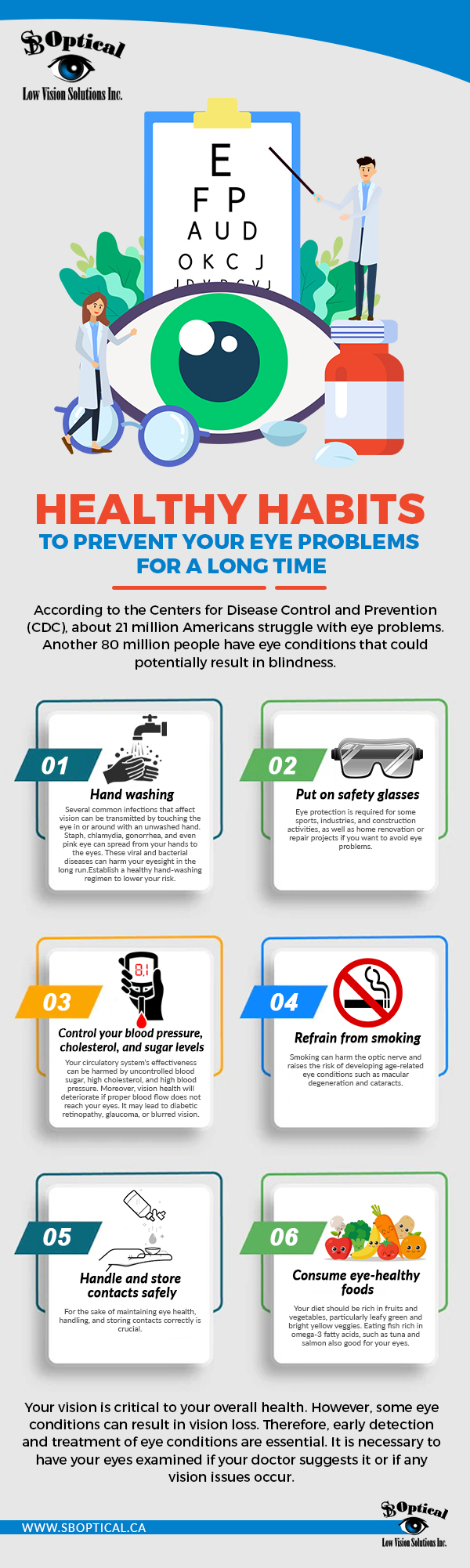
According to the Centers for Disease Control and Prevention (CDC), about 21 million Americans struggle with eye problems. Another 80 million people have eye conditions that could potentially result in blindness.
Your quality of life would drastically change without vision. Fortunately, science has a wealth of knowledge regarding the root causes of visual issues. You can safeguard the health of your eyes by adopting these ten easy habits.
Also read: Common Eye Problems Symptoms to be Looked for in Children
10 Healthy Habits for Prolonged Vision
1. Hand washing
Several common infections that affect vision can be transmitted by touching the eye in or around with an unwashed hand. Staph, chlamydia, gonorrhea, and even pink eye can spread from your hands to the eyes. These viral and bacterial diseases can harm your eyesight in the long run.
If you haven’t just cleansed your hands, avoid touching anything near your eyes for petty reasons.
2. Handle and store contacts safely
For the sake of maintaining eye health, handling, and storing contacts correctly is crucial. Some tips to prevent eye problems:
Avert prolonged wear.
Do not reuse a solution.
When the solution expires, discard it. A small amount of waste is preferable to an eye infection.
Without cleaning your hands, never touch your contacts.
3. Steer clear of harmful cosmetic procedures
One of the most crucial organs you possess is your eyes. Avoid risky processes like iris tattooing and needless lid lifts at the expense of your eye health.
Even the use of cosmetic contacts without your optometrist’s approval can be dangerous and extremely harmful. In simple words, they are not worth the nuisance.
4. Put on safety glasses
Eye protection is required for some sports, industries, and construction activities, as well as home renovation or repair projects if you want to avoid eye problems.
5. Consume eye-healthy foods
Your diet should be rich in fruits and vegetables, particularly leafy green and bright yellow veggies. Eating fish rich in omega-3 fatty acids, such as tuna and salmon also good for your eyes.
6. Exercise
Exercise reduces stress, regulates blood sugar, and enhances blood flow. Get some workout every day and raise your heart rate to maintain healthy eyes.
7. Control your blood pressure, cholesterol, and sugar levels
Your circulatory system’s effectiveness can be harmed by uncontrolled blood sugar, high cholesterol, and high blood pressure. Moreover, vision health will deteriorate if proper blood flow does not reach your eyes. It may lead to diabetic retinopathy, glaucoma, or blurred vision.
8. Rest your eyes
Using a computer for extended periods can cause eye strain. The 20-20-20 rule can aid in lessening eye fatigue. The process involves looking away every 20 minutes for 20 seconds to approximately 20 feet from you.
9. Refrain from smoking
Smoking can harm the optic nerve and raises the risk of developing age-related eye conditions such as macular degeneration and cataracts.
10. Consult an eye care specialist
Visit your optometrist routinely. They will be able to detect problems early and advise you on lifestyle modifications that will help you preserve your eyesight longer.
Conclusion
Your vision is critical to your overall health. However, some eye conditions can result in vision loss. Therefore, early detection and treatment of eye conditions are essential. It is necessary to have your eyes examined if your doctor suggests it or if any vision issues occur.
Moreover, maintaining good eye health is vital as maintaining good physical health. One set of eyes is all you get.Use these healthy habits to maintain their well-being.